
WooCommerce: Your Open-Source Ecommerce Powerhouse
Store BuildersDescription
WooCommerce is the open-source ecommerce platform that helps merchants and developers build successful businesses for the long term.
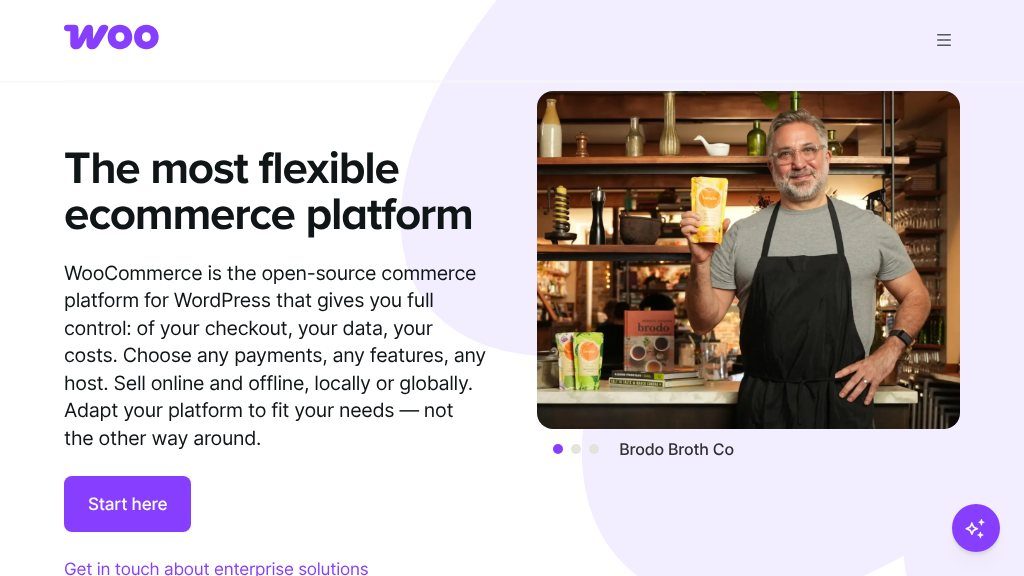
A Closer Look
Someone usually arrives at WooCommerce after deciding that a standard hosted store builder is too restrictive. Perhaps they already run a WordPress site and want to add commerce, or they need more control over checkout, data, hosting, and payment choices. WooCommerce positions itself as an open-source commerce platform for WordPress, designed for businesses that want to shape their store around their own requirements rather than fit into a fixed template.
The website presents the platform as suitable for both online and offline selling, with options for local or global commerce. That makes it relevant to a small brand testing an online channel as well as a more established operation planning a customized storefront. The exact effort and cost will depend on the chosen host, payment services, themes, extensions, and development work, so those details should be assessed before committing.
Core Offering
The central appeal is control. WooCommerce allows merchants to choose their hosting arrangement, payment options, and additional functionality instead of relying on one bundled environment. Its WordPress foundation also gives existing WordPress users a direct route to adding ecommerce to a site they already manage.
Customization is supported through themes and a large extension ecosystem. These additions can help tailor the appearance and capabilities of a store, although the appropriate choices will vary by business model. Developers can also use WooCommerce to build stores for clients or create more specialized commerce experiences.
Strengths
- Open-source WordPress foundation supports substantial control over checkout, data, hosting, and costs
- Themes and extensions provide multiple ways to adapt a store’s design and functionality
- Supports online and offline selling for local or global commerce needs
- Offers a path for both merchants creating stores and developers building solutions for clients
Cons
- The flexible setup requires choices about hosting, payments, themes, and extensions
- Pricing, service requirements, and the availability or cost of specific add-ons are not detailed in the supplied material
- Businesses should verify the technical work and ongoing responsibilities involved in operating their chosen setup
Practical Workflows
A typical workflow might begin with creating a WordPress-based store, selecting a suitable theme, and configuring checkout and payments. From there, a merchant can adapt the storefront with extensions, operate sales online or offline, and expand from a local audience to broader markets as its needs develop. The platform’s own examples also highlight multichannel selling, including a case involving a WooCommerce store, TikTok, Amazon, and third-party retailers; visitors should verify which connections are available and whether they require separate extensions or services.
For larger organizations, WooCommerce advertises enterprise solutions and customer-success support. The scope of that support, along with service terms and implementation requirements, should be confirmed directly.
Best-Fit Users
WooCommerce is a practical candidate for WordPress users, merchants seeking open-source flexibility, and developers building customized ecommerce sites. It may be less suitable for someone who wants a narrowly guided, all-in-one setup with minimal decisions about hosting, payments, and add-ons.
Balanced Takeaway
This platform stands out for combining WordPress with broad control over a store’s structure and commerce choices. It is worth comparing when customization and ownership of store data matter. Before choosing it, confirm current pricing, hosting responsibilities, payment availability, extension costs, support options, and the technical work required for the specific store you plan to build.
Embeds
Copy short script widgets for this listing. People often use Textfrog to search for their next personal or work tool. Encourage your community to leave reviews on Textfrog.
Review widget
A clean review badge with stars and review count.
Featured badge
A compact badge for products listed on Textfrog.
Similar Tools
Think big — and grow bigger — with our flexible, professional-grade ecommerc...

Try Shopify free and start a business or grow an existing one. Get more than ec...
Featured Links
Eduify is an online education platform that provides tools and resources for lea...